
Introduction: The Sell-Side Sales Paradox
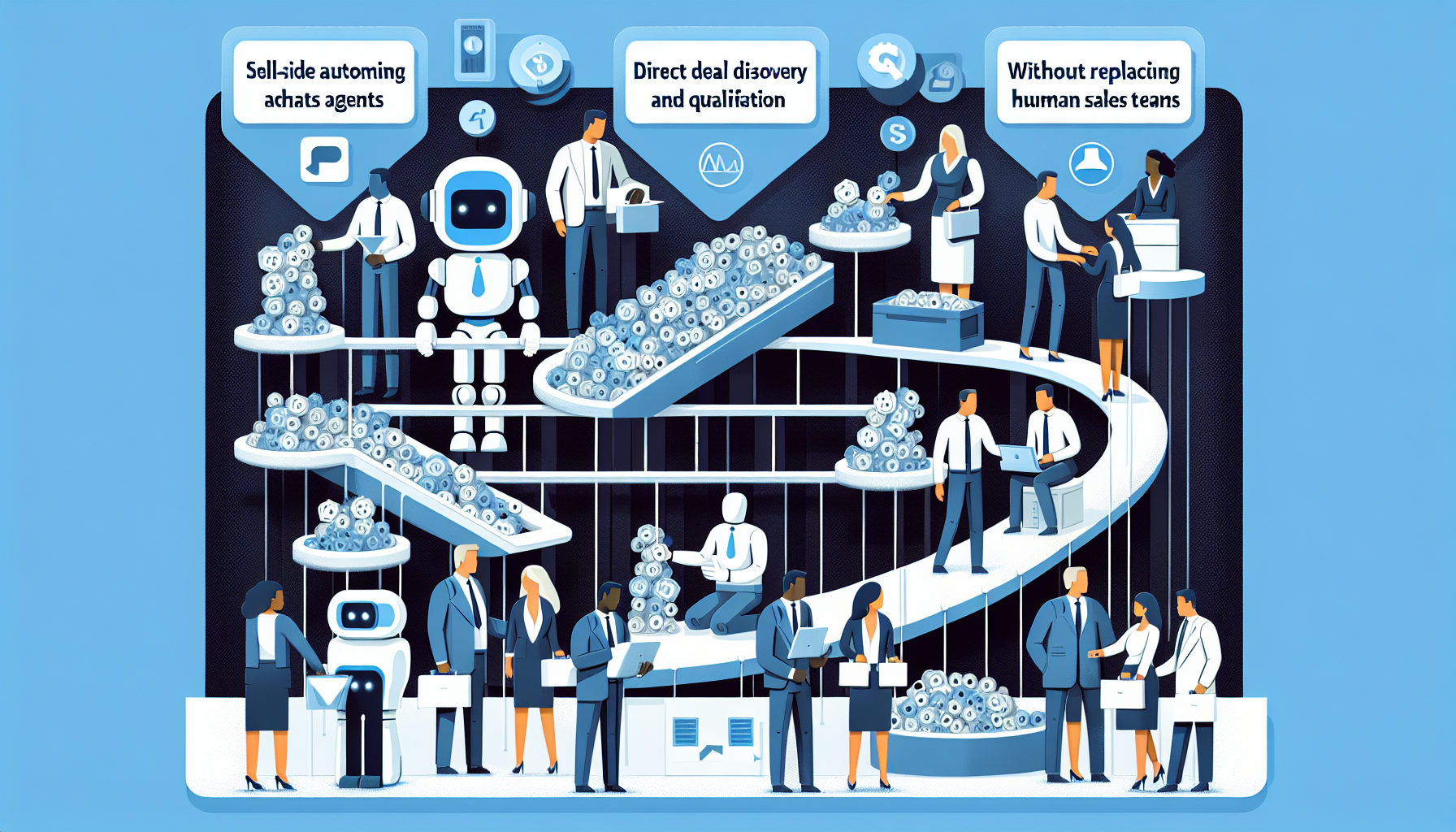
There is a fundamental tension at the heart of every supply-side sales organization. Publishers and SSPs know that direct deals and preferred partnerships drive better margins, stronger relationships, and more predictable revenue than open auction inventory alone. Yet the process of discovering, qualifying, and nurturing these opportunities remains stubbornly manual, time-consuming, and dependent on institutional knowledge that walks out the door every time a senior sales rep moves on. The advertising technology industry has spent the better part of two decades automating the transaction itself. Real-time bidding, header bidding, and programmatic guaranteed have transformed how inventory changes hands in milliseconds. But the relationship layer sitting above all that infrastructure? That has remained surprisingly analog. Enter sell-side AI agents: a new category of intelligent automation that promises to change the equation without falling into the trap that has plagued so many enterprise AI initiatives. Rather than attempting to replace the nuanced, relationship-driven work of human sales professionals, the most effective implementations are designed to handle the tedious discovery and qualification work that prevents those professionals from doing what they do best. This thought piece explores how SSPs, ad networks, and publishers can leverage AI agents to automate the upstream work of deal discovery and qualification while keeping human expertise firmly at the center of the revenue equation.
The Hidden Tax on Sell-Side Sales Teams
Before we can discuss solutions, we need to understand the problem in concrete terms. The typical sell-side sales workflow involves several distinct phases, each with its own challenges and inefficiencies.
Discovery: Finding the Right Buyers
For an SSP or publisher sales team, the first challenge is simply knowing who to talk to. The programmatic advertising ecosystem contains thousands of potential demand partners, brands, and agencies. But not all of them are relevant to a particular publisher's inventory. A sports publisher needs to find brands interested in reaching sports enthusiasts. A CTV app developer needs to identify agencies with video budgets and clients whose brand safety requirements align with their content. The discovery process traditionally involves:
- Manual research across multiple data sources: Sales teams cobble together information from LinkedIn, press releases, industry publications, competitive intelligence tools, and their own CRM systems
- Network-dependent intelligence: Much of the best information about who is buying what comes from industry relationships and word-of-mouth, creating an advantage for veteran sales reps that is impossible to systematize
- Reactive positioning: Without systematic discovery, many teams end up responding to inbound inquiries rather than proactively pursuing the best-fit opportunities
The inefficiency here is staggering. Research from Salesforce suggests that sales representatives spend only 28% of their time actually selling, with the remainder consumed by administrative tasks, research, and internal meetings. For sell-side ad tech specifically, the fragmentation of the ecosystem makes this even worse. Understanding which DSPs are active in which verticals, which brands are shifting budgets between channels, and which agencies have new programmatic mandates requires constant vigilance across dozens of information sources.
Qualification: Separating Signal from Noise
Even when potential opportunities are identified, the qualification process presents its own challenges. Not every interested buyer represents a valuable deal. The sell-side needs to assess:
- Budget alignment: Does the potential partner have spending levels that justify the sales effort required?
- Technical compatibility: Can they actually buy inventory through the available channels? Do their creative requirements align with supported formats?
- Strategic fit: Does the partnership align with the publisher's brand safety requirements, pricing strategy, and long-term positioning?
- Timing and intent: Is this an active evaluation or a distant future consideration?
Human judgment is essential for the nuanced aspects of qualification, but the data gathering that informs that judgment is often manual and inconsistent. A sales rep might spend hours researching a potential partner only to discover in an initial conversation that they lack the budget for premium inventory. Or worse, they might deprioritize an opportunity that appears small on the surface but actually represents the tip of a much larger iceberg.
The Institutional Knowledge Problem
Perhaps the most insidious challenge facing sell-side sales organizations is the concentration of critical intelligence in the minds of individual team members. When a senior sales director knows that a particular agency always increases their CTV budgets in Q3, or that a specific brand is preparing to shift spend from social to programmatic display, that knowledge drives real business results. But it is also fragile. It leaves when that person leaves, and it cannot be leveraged by other team members. This creates a paradox: the most valuable sales intelligence is often the least systematized, while the most systematized data (basic firmographics, public financial information) is often the least actionable.
What Sell-Side AI Agents Actually Are (And Are Not)
The term "AI agent" has become somewhat overloaded in recent technology discourse. For our purposes, a sell-side AI agent refers to an autonomous or semi-autonomous system that can:
- Monitor and synthesize information: Continuously track relevant data sources and identify patterns or opportunities that warrant attention
- Execute multi-step workflows: Perform sequences of research, analysis, and communication tasks without requiring human intervention at each step
- Learn and adapt: Improve performance over time based on feedback and outcomes
- Integrate with existing systems: Work within CRM platforms, email systems, and data infrastructure rather than requiring wholesale replacement of existing tools
Importantly, these agents are not attempting to conduct sales conversations, negotiate deal terms, or replace the relationship-building that remains essential to high-value partnerships. The distinction matters because much of the skepticism about AI in sales stems from overpromising. Early chatbots and automated outreach systems earned a deservedly poor reputation by attempting to simulate human interaction badly. Modern AI agents take a different approach: they handle the research, data synthesis, and administrative work that does not require human judgment while surfacing opportunities and insights to human professionals who can act on them effectively.
The Agent Architecture for Sell-Side Applications
From a technical perspective, effective sell-side AI agents typically combine several capabilities:
- Large language models (LLMs): For understanding unstructured text, generating research summaries, and identifying relevant information across diverse sources
- Structured data analysis: For processing programmatic signals, financial data, and quantitative metrics
- Workflow orchestration: For managing multi-step processes and routing tasks appropriately between automated and human-handled steps
- Integration layers: For connecting to CRM systems, email platforms, advertising infrastructure, and external data sources
The most sophisticated implementations also incorporate retrieval-augmented generation (RAG) techniques, allowing agents to reason over proprietary data sources like historical deal information, customer communications, and internal market intelligence.
Practical Applications: Where AI Agents Add Value
Let us move from theory to practice. The following scenarios illustrate how AI agents can automate specific aspects of deal discovery and qualification while preserving human decision-making authority.
Scenario 1: Proactive Partner Identification
Consider an SSP that specializes in premium video inventory across CTV and mobile app environments. Their sales team needs to identify demand partners who:
- Have active CTV buying strategies: Not all DSPs and agencies are equally sophisticated in their video capabilities
- Work with brands appropriate for premium environments: Brand safety alignment is essential
- Are expanding their programmatic investment: Growing buyers represent better long-term partnerships than those with flat or declining budgets
An AI agent configured for this scenario might: Monitor relevant signals continuously: The agent tracks press releases, job postings (hiring video specialists signals investment), earnings calls (for publicly traded ad tech companies), industry coverage, and social media activity from key decision-makers. Cross-reference with programmatic data: By analyzing bidding patterns, the agent can identify which demand sources are actually active in relevant inventory categories versus those who merely claim to be. Score and prioritize opportunities: Based on the monitored signals and available data, the agent maintains a ranked list of potential partners, updated continuously as new information becomes available. Prepare research briefs: For high-priority opportunities, the agent compiles relevant background information, recent news, likely decision-makers, and potential talking points. The human sales team receives a continuously updated pipeline of qualified opportunities, each accompanied by the context needed to engage effectively. They spend their time on outreach and relationship-building rather than research.
Scenario 2: Trigger-Based Outreach Recommendations
Not all opportunities are created equal, and timing often determines whether an outreach effort succeeds or fails. AI agents excel at monitoring for trigger events that signal an optimal moment for engagement.
- Executive changes: A new VP of Programmatic at an agency often means a review of existing partnerships and openness to new relationships
- Budget announcements: Brands announcing increased digital spending or specific channel investments signal active buying intent
- Competitive shifts: When a competitor loses a major partnership or faces technical difficulties, their demand partners may be receptive to alternatives
- Seasonal patterns: Many categories have predictable budget cycles that can be anticipated and prepared for
An AI agent monitoring these triggers can alert sales teams to opportunities at the moment they emerge, rather than days or weeks later when the window may have closed. Consider the following simplified example of how such a trigger system might be configured:
triggers:
executive_change:
roles:
- "VP Programmatic"
- "Head of Video"
- "Director of Partnerships"
companies: "${target_account_list}"
action: "high_priority_alert"
budget_signal:
keywords:
- "increased digital investment"
- "programmatic expansion"
- "CTV strategy"
sources:
- "earnings_calls"
- "press_releases"
- "trade_publications"
action: "opportunity_brief"
competitive_event:
event_types:
- "partnership_termination"
- "technical_incident"
- "leadership_departure"
competitors: "${competitor_list}"
action: "market_opportunity_analysis"
This configuration would enable an agent to continuously monitor for relevant events and route them appropriately, ensuring that human sales teams are informed at moments when action is most likely to be effective.
Scenario 3: Automated Qualification Workflows
When inbound interest arrives, whether through RFI submissions, conference connections, or referrals, qualification becomes the priority. AI agents can accelerate this process dramatically. Consider a publisher receiving an inbound inquiry from an agency they have not previously worked with. A qualification agent might: Gather background information automatically: The agent researches the agency's client roster, recent campaigns, typical budget ranges, and any public information about their programmatic capabilities. Analyze compatibility: Based on the publisher's inventory characteristics and the agency's apparent needs, the agent assesses likely fit across dimensions like format, geography, and vertical focus. Identify decision-maker context: The agent maps organizational structure and identifies relevant stakeholders, their backgrounds, and any existing relationships with the publisher's team. Generate a qualification summary: The sales rep receives a comprehensive brief within minutes of the inbound arriving, enabling an informed response rather than a generic acknowledgment. The key here is that the agent handles information gathering and synthesis while the human makes the qualification decision. The agent might flag a potential concern, like the agency's apparent focus on performance campaigns that may not align with the publisher's brand-building inventory, but the human decides how to proceed.
Scenario 4: Pipeline Intelligence and Deal Acceleration
Beyond initial discovery and qualification, AI agents can provide ongoing intelligence about active opportunities. This is where integration with CRM and communication systems becomes particularly valuable.
- Relationship mapping: Agents can analyze email and calendar data to map the actual relationships between team members and contacts at target accounts, identifying gaps in coverage and engagement
- Engagement scoring: By tracking communication patterns and response rates, agents can identify which opportunities are progressing healthily versus those that may be stalling
- Competitive intelligence: Continuous monitoring can surface signals that a prospect is evaluating competitors, enabling proactive response
- Next-best-action recommendations: Based on historical patterns and current context, agents can suggest specific outreach tactics or content likely to advance a deal
These capabilities transform the CRM from a record-keeping system into an active intelligence platform that helps sales teams prioritize and act effectively.
Why Augmentation Beats Replacement
The examples above share a common thread: AI agents handling information work while humans handle relationship work. This division is not merely a compromise or a transitional state. It reflects fundamental differences between what automation does well and what human professionals do well.
The Limits of Automated Communication
Despite impressive advances in language models, automated communication in high-stakes sales contexts remains problematic for several reasons:
- Relationship equity: Business relationships are built on mutual investment and authentic interaction. Recipients can often detect automated outreach, and even when they cannot, the lack of genuine understanding undermines trust-building
- Contextual nuance: Sales conversations involve reading between the lines, understanding organizational politics, and navigating sensitive topics. These require human emotional intelligence
- Accountability: When things go wrong in a partnership, human relationships provide the trust foundation for working through challenges. Automated systems cannot build this kind of resilience
Research from the RAIN Group consistently shows that buyer preferences favor genuine human engagement, particularly for complex B2B purchases. While efficiency matters, the attempt to automate the communication layer often backfires.
The Opportunity Cost Problem
Perhaps more importantly, the attempt to fully automate sales processes often misses the real opportunity. The goal should not be to eliminate sales headcount but to make existing team members dramatically more effective. Consider the economics: a skilled sell-side sales professional might cost $150,000 or more annually when fully loaded. If that person spends 70% of their time on research and administrative tasks, only $45,000 of that investment is going toward actual selling. AI agents that reclaim even half of that non-selling time effectively double the selling capacity of the team without adding headcount. The return on investment comes not from replacement but from leverage.
The Trust and Control Imperative
For publishers and SSPs, the relationships with demand partners are strategic assets that require careful management. Fully automated systems raise legitimate concerns about brand representation, message consistency, and error recovery. When an AI agent makes a mistake in background research, it can be caught and corrected before any external communication. When an automated system sends an errant message or makes an inappropriate commitment, the damage is immediate and potentially lasting. By keeping humans in the communication loop, organizations maintain control over their most important external relationships while still benefiting from automation's efficiency gains.
Implementation Considerations
For organizations considering the deployment of sell-side AI agents, several practical factors warrant attention.
Data Foundation Requirements
AI agents are only as effective as the data they can access. Successful implementations typically require:
- CRM hygiene: Clean, consistent, and complete records in the customer relationship management system
- Communication access: Appropriate integration with email and calendar systems to provide relationship context
- Market data sources: Access to external intelligence sources, whether through subscriptions, APIs, or web monitoring capabilities
- Programmatic signals: For ad tech specifically, access to bidding data, ads.txt/sellers.json information, and other technical indicators
Organizations with fragmented or low-quality data may need to invest in foundational improvements before AI agents can deliver meaningful value.
Workflow Design
The design of human-agent workflows significantly impacts both effectiveness and adoption. Key principles include:
- Clear handoff points: Define explicitly where automated processes end and human action begins
- Appropriate notification design: Too many alerts create noise; too few miss important opportunities. Calibration requires ongoing attention
- Feedback mechanisms: Agents improve when they receive signals about which recommendations were valuable and which missed the mark
- Override capabilities: Human users need the ability to adjust, correct, and override agent behavior when circumstances warrant
Change Management
Perhaps the most overlooked aspect of AI agent deployment is change management. Sales teams may view automation with skepticism, particularly if they fear job displacement. Successful implementations typically involve:
- Early involvement: Including sales team members in the design and configuration process
- Clear value communication: Explaining how agents make their jobs easier rather than threatening their positions
- Gradual rollout: Starting with narrow use cases and expanding as trust builds
- Success measurement: Tracking metrics that demonstrate value to individual users, not just organizational leadership
The Competitive Landscape and Future Direction
The sell-side AI agent space is evolving rapidly. Several categories of providers are emerging:
- Horizontal sales intelligence platforms: Companies like ZoomInfo, Apollo, and Gong are adding AI capabilities to their existing sales enablement offerings
- Vertical specialists: Ad tech-specific platforms that understand the nuances of the programmatic ecosystem and can incorporate relevant signals like ads.txt analysis, SDK detection, and bidding patterns
- Custom implementations: Larger organizations building proprietary agents using foundational models and their own data assets
For sell-side organizations evaluating options, the key consideration is domain expertise. Generic sales intelligence tools may miss the specific signals that matter in ad tech, like understanding which DSPs are actually active in CTV or recognizing when a demand partner's ads.txt changes signal a shift in strategy.
Looking Ahead
Several trends will shape the evolution of sell-side AI agents over the coming years: Deeper programmatic integration: As agents gain access to bidding data, transaction records, and yield analytics, their ability to identify optimization opportunities and predict partner behavior will improve significantly. Multi-agent collaboration: Rather than single monolithic agents, we are likely to see ecosystems of specialized agents handling different aspects of the sales workflow and coordinating their activities. Proactive deal structuring: Beyond discovery and qualification, future agents may recommend specific deal structures, pricing strategies, and partnership terms based on analysis of historical patterns and market conditions. Real-time competitive intelligence: Agents that can detect competitive threats as they emerge, whether through bidding pattern changes, relationship signals, or market positioning shifts, will provide significant strategic advantage.
Conclusion: The Human-AI Partnership Model
The question facing sell-side ad tech organizations is not whether to adopt AI agents but how to deploy them in ways that genuinely improve outcomes. The evidence increasingly suggests that augmentation models, where agents handle information work while humans handle relationship work, outperform both pure human approaches and attempts at full automation. This should be reassuring for sales professionals concerned about technological displacement. The skills that make great sellers, which includes the ability to understand client needs, navigate organizational dynamics, build trust over time, and close complex deals, remain essential and difficult to automate. What changes is the support structure. Instead of spending hours on manual research, data entry, and administrative tasks, sales professionals equipped with effective AI agents can focus their expertise where it creates the most value. For publishers, SSPs, and ad tech companies on the sell side, this shift represents a genuine competitive opportunity. Organizations that successfully deploy AI agents for discovery and qualification will be able to pursue more opportunities with greater precision while maintaining the relationship quality that distinguishes successful partnerships from transactional exchanges. The technology is maturing rapidly. The foundational models are capable enough. The integration points exist. What remains is the organizational will to reimagine sales workflows around human-AI collaboration rather than either pure manual processes or the unrealistic promise of full automation. Those who get this balance right will find themselves discovering better opportunities, qualifying them faster, and ultimately building the kind of preferred partnerships that drive sustainable sell-side success.
The programmatic advertising ecosystem continues to evolve, and the tools for navigating it must evolve as well. AI agents represent the next frontier in sell-side sales enablement, not as replacements for human expertise but as powerful amplifiers of it.